Arranging a tow is easier when the towing provider has clear information before the vehicle is collected. A useful car towing pickup checklist helps you explain where the car is, what condition it is in, where it needs to go and how the collection point can be accessed. It also gives the provider a better basis for reviewing the request and confirming whether the job can be arranged.
TowPRO provides non-accident vehicle towing, including local and longer-distance vehicle transport and breakdown towing within its service scope. Requests are enquiries: the team must confirm the details, availability, timing and pricing before a tow is dispatched.
Use this car towing pickup checklist before you submit a request
Prepare the following details before contacting a towing provider. If you do not know an answer, say so rather than guessing.
1. Vehicle identification
Start with the basic car towing information:
- Vehicle make and model.
- Approximate year or model series, if known.
- Registration number.
- Vehicle type, such as sedan, hatchback, SUV or ute.
- Any unusual dimensions or modifications that may affect loading or transport.
Accurate vehicle details help the provider understand what is being collected. If the vehicle has been modified, has low ground clearance or has another feature that may affect loading, mention it early. Do not assume every towing arrangement is suitable for every vehicle.
2. Exact pickup location
Give the full pickup address, including the suburb and postcode. Then add practical directions that help someone locate the vehicle without unnecessary back-and-forth.
For example, explain whether it is:
- In a driveway, private garage or apartment car park.
- In a marked parking bay or behind a building.
- At a workplace, commercial site or other managed property.
- Near a gate, loading area or identifiable entrance.
This is where towing pickup details matter. If the street address does not lead directly to the vehicle, provide a nearby landmark or clear entry instructions. If access requires a code, key, swipe card or permission from a building manager, explain how access can be arranged. Do not share security codes in a public place; provide access information directly to the provider through an appropriate contact method.
3. Vehicle condition and whether it can move
Describe what the vehicle can and cannot do. For example, state whether the engine starts, whether the wheels roll, and whether the steering or braking appears affected. Mention a flat tyre, damaged wheel, low battery, mechanical fault or other known issue.
Do not try to diagnose a fault if you are unsure. A simple description is more useful than a guess. If the vehicle is in a position that makes access difficult, explain that as well.
The information needed for car towing may change depending on the vehicle’s condition. A car that starts and rolls may present different loading considerations from one that cannot move under its own power. The provider can use your description to ask follow-up questions and assess the request.
4. Pickup access and restrictions
Tell the provider about anything that could affect access to the vehicle or the collection area. Relevant details may include:
- Low garage or basement clearance.
- Narrow driveways or tight turns.
- Steep ramps or uneven surfaces.
- Height barriers, locked gates or restricted entry hours.
- Limited room to position a tow vehicle.
- Site rules for commercial premises or apartment buildings.
If you are unsure about a clearance measurement, do not estimate it as exact. A photograph of the entrance or parking area may help explain the situation, provided it can be taken safely and you have permission to share it.
5. Destination and delivery contact
Provide the full destination address and the name and contact details of the person who will receive the vehicle, if different from the person making the request. Confirm whether the destination is a home, repairer or another agreed location.
A clear destination helps the provider review the requested journey and discuss the arrangements. If the destination is not final, explain that before the request is assessed rather than changing it without notice later.
6. Preferred collection time and contact details
Give your preferred date and a suitable time window. These are preferences, not a confirmed arrival time. Keep the details to provide when booking a car tow together so you can answer follow-up questions consistently. Make sure the phone number and email address you provide are correct, and tell the provider who will be available at the pickup point.
If someone else will meet the tow operator, provide their name and contact number and make sure they know the vehicle and collection details. Confirm any access or key arrangements in advance.
7. Photos and additional notes
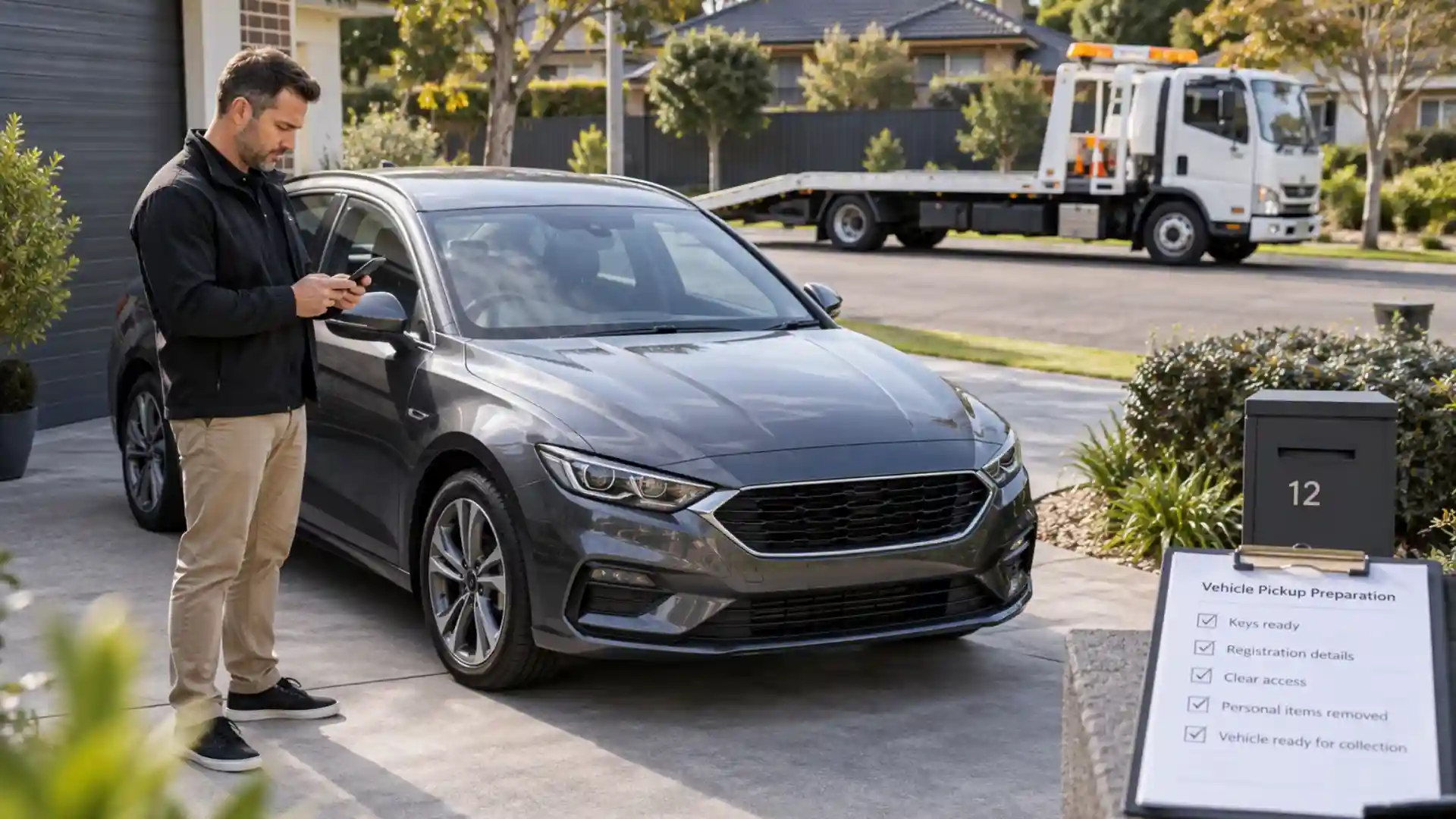
When preparing a vehicle for towing, organise any available keys and confirm who can provide access at the collection point. Where practical, prepare clear photographs that help explain the vehicle and pickup location. Useful images may show the vehicle from outside, its position in the parking area, the entrance to a restricted space or an access obstacle.
Only take photographs when it is safe and permitted. Do not stand in traffic or enter a restricted area to get a better picture. Add short notes to explain anything the images do not show, such as a locked gate or limited opening hours.
What to check before sending your car collection checklist
Before submitting the request, review the details once. Check that your car towing information is accurate, your vehicle details are complete, and that the towing pickup details explain how the vehicle can be reached:
- Vehicle make, model and registration are correct.
- Pickup address, suburb and access instructions are complete.
- Vehicle condition and ability to roll or steer are described accurately.
- Any height, width or entry restrictions are mentioned.
- Destination address and receiving contact are supplied.
- Preferred collection window and your contact details are correct.
- Photos or extra notes are included where useful.
This car collection checklist is intended to make the initial enquiry clearer. The information needed for car towing should describe the actual vehicle and collection conditions, not assumptions. It does not confirm that a tow has been accepted or scheduled. Keep this car collection checklist available when the provider calls so you can confirm or clarify the information. Wait for the provider to contact you and confirm the service details before making assumptions about timing or price.
What happens after you send the information?
After receiving the request, the provider may contact you to clarify the vehicle, pickup point, destination, access conditions and preferred timing. These details, along with distance and vehicle condition, may affect whether the requested arrangement can be confirmed and the price quoted.
For a general explanation of towing categories and Victorian guidance, read Transport Victoria’s tow truck information. The page explains the distinction between trade towing for breakdowns and accident towing. TowPRO’s stated service scope is non-accident vehicle towing only.
You can also review TowPRO’s local and long-distance towing information to understand the service category relevant to your enquiry. When you are ready, submit your details through the TowPRO request form. The team will contact you to confirm the service, availability, timing and pricing before dispatch.
Frequently Asked Questions
-
What information should I prepare before requesting a car tow?
Prepare your vehicle make, model and registration, full pickup address, vehicle condition, access restrictions, destination address, preferred collection time and contact details.
-
Can I request towing if my car does not start?
You can submit an enquiry describing the vehicle’s condition and the reason it cannot start. TowPRO provides non-accident breakdown towing within its service scope. The team will confirm whether the requested arrangement can be provided.
-
Does submitting an online towing request confirm my booking?
No. An online request is an enquiry, not a confirmed booking or dispatch. TowPRO will contact you to confirm the service details, availability, timing and pricing before dispatch.
-
Why should I provide details about the pickup location?
The full address, parking position, entry instructions and any access restrictions help the provider assess the collection arrangements and identify information that may need clarification.
-
Should I provide photographs before arranging vehicle towing?
Where practical, clear photographs of the vehicle and pickup access can help explain the situation. Only take and share photographs when it is safe and permitted.